Strengthening Scholarly Publishing in Africa is a collaborative webinar series bringing together ASSAf, Crossref, DOAJ, EIFL, and PKP to share practical guidance, resources, and approaches for strengthening the publishing ecosystem in the region. This series responds to the growing interest in open access, digital publishing, stronger editorial practices, and greater visibility of research publishing across Africa. Each partner organisation has long experience of building that capacity in the area of their expertise. In this series, we’re coming together to offer a more holistic learning experience to the community of African publishers, putting different aspects of the publishing process in their broader context.
We’ve had a year full of growth and reached a milestone of 60+ team members; let’s take a moment to digest what that means for people operations. Hiring staff in 19+ countries is no easy task, but we are up for it, and I can honestly say it is the main reason why our culture is so great. That might sound biased coming from Crossref’s first Head of Human Resources, but hear me out.
You can now register rich metadata for a variety of record types in Metadata Manager using simple, guided workflows. The tool is used by many in our community to register grant and journal article records, and it has now been expanded to support books and chapters, reports, dissertations, and post-publication updates for journal content.
Metadata Manager makes it easier to capture identifiers for contributors and their affiliations, funding information, references, and more. Thanks to automated reference matching by Crossref, this offers greater visibility for the works, while the affiliations and funding information can serve as important trust signals for the community.
This year’s edition of the FORCE11 conference was hosted in June by Singapore Management University. Its title, “To Go Far, Go Together: Advancing Scholarly Communication Across Boundaries and Disruptions” truly resonates with Crossref’s truths; it takes a village! Crossref only works as long as the scholarly research community wants to work together globally, across all disciplines, for integrity and openness of the scientific record. The conversations were influenced by a genuinely diverse mix of librarians, researchers, open infrastructures, and service providers, and that mix shaped almost every interaction we had at the conference.
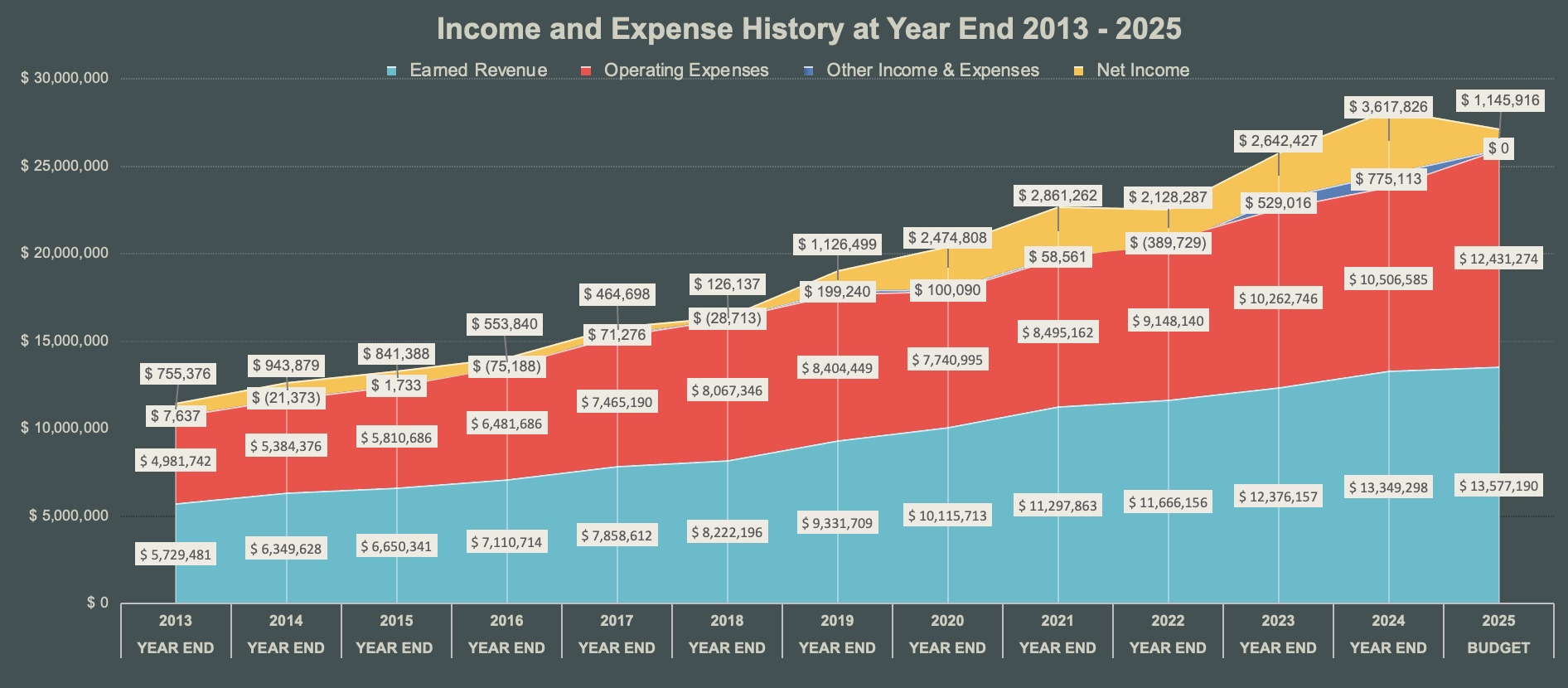
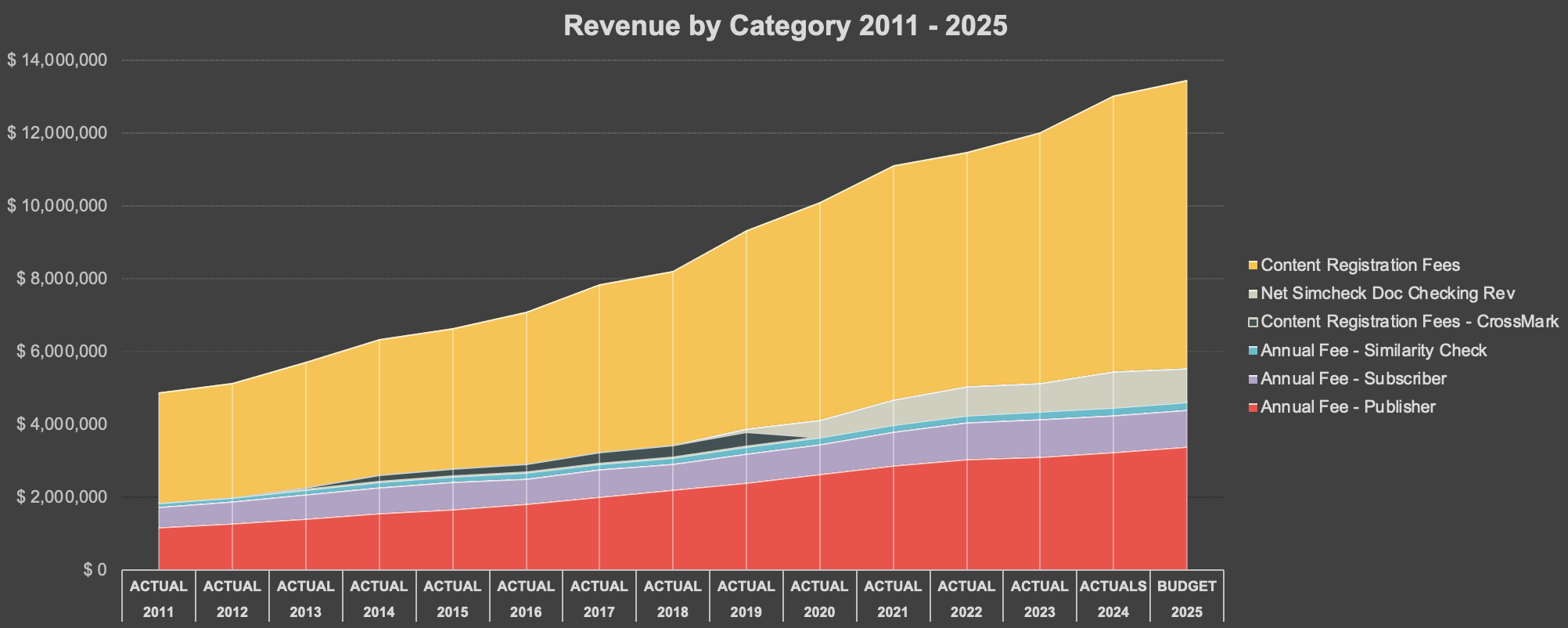
We operate on a budget of around $14 million (USD). About one-third of our revenue comes from annual dues (e.g., membership fees, subscriptions) and two-thirds from services (e.g., Content Registration, Similarly Check document checking). Our fees are set and reviewed by the Membership & Fees committee, which includes our staff, board, and community members. This group also created a set of fee principles which were approved by the board in 2019.
About 70% of our expenses are related to people - staff, benefits, and contracted support. 30% of our costs are everything else - hosting costs, licensing fees, events, and costs to do business like banking fees and insurance.
Each year we strive to generate a small operating net and have been able to do so nearly every year.
We also maintain a reserve fund to support long-term sustainability. We periodically report on our progress towards fulfilling the Principles of Open Scholarly Infrastructure: 2020, 2022, 2024
Below is a look at how our operations have changed over time.
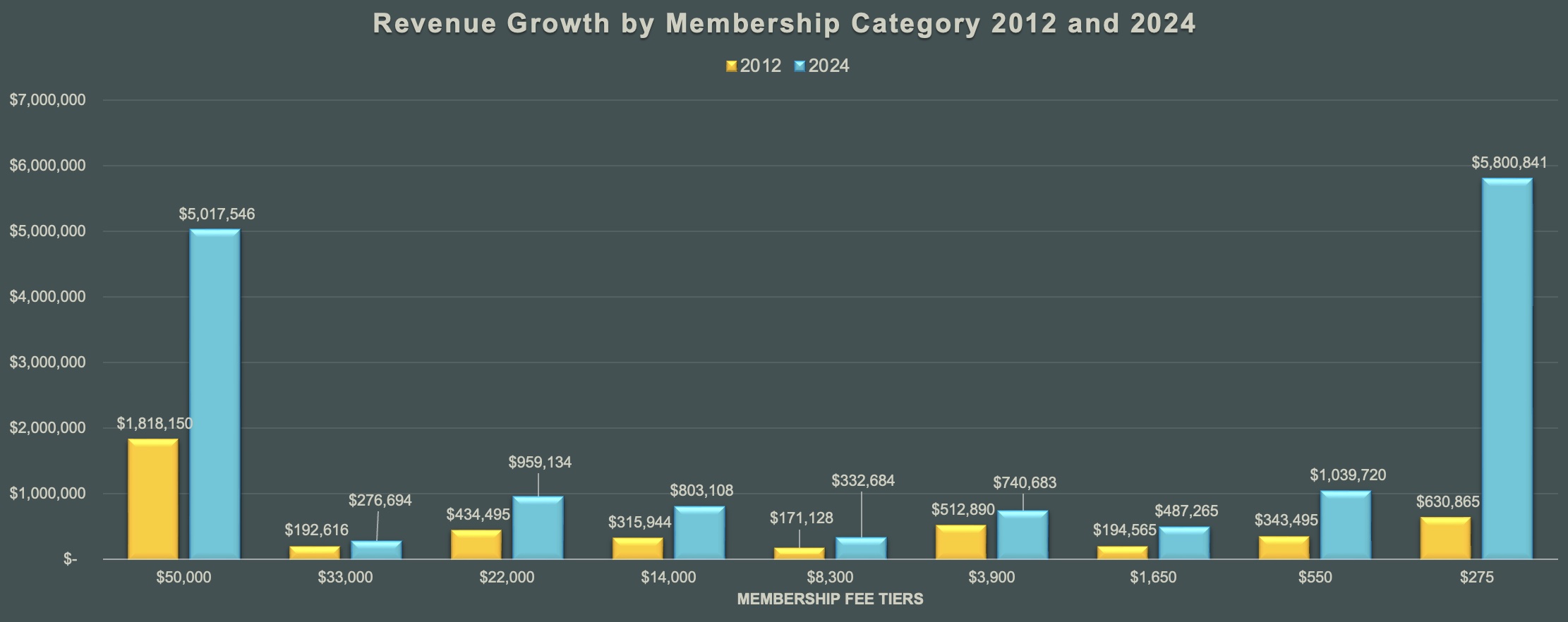
The majority of our revenue comes from members in smallest and largest tiers. We have seen the most growth in revenue from the smallest fee tier.F
Annual financial reporting
As a not-for-profit, we are tax-exempt, and to maintain that status, we undergo a financial audit each year by an independent accounting firm. Our auditors prepare our Form 990, which the US IRS requires and is made publicly available. It gives an overview of what we do, how we are governed, and detailed financial information.
Below are our recent Form 990s and audited financial statements.