In April 2025, we launched the metadata matching project, in order to add missing relationships to the scholarly metadata. We will do this by consolidating all existing and planned matching workflows, which enrich member-deposited metadata in Crossref. This unified service will result in a more complete research nexus. In this blog post, we share our latest milestone: developing and evaluating a strategy for matching funder metadata to Research Organization Registry (ROR) identifiers.
Preserving the integrity of the scholarly record is an important component of the overall endeavour to protect research integrity. Open scholarly infrastructure enables persistent recording of research objects and associated metadata, which provides an evidence trail for these objects for all in the research community. Crossref and DataCite – as providers of essential infrastructure for preservation of the scholarly record – we share our joint expertise in the new guide on “Why metadata matters for research integrity and how to contribute”.
As our global community continues to grow, it is important for us to build and maintain our connections within it. In March this year, we had the opportunity to visit São Paulo for a community event at the Fundação Getúlio Vargas. The content of our presentations is available online. Events such as this provide an opportunity for us to update our members on Crossref fundamentals and developments, and help us better tune in to the varied needs of our communities and learn how we can work together more effectively. This was our third visit to Brazil, with previous events held in Campinas and São Paulo in 2016, and Goiânia and Fortaleza in 2018.
Each organization in the global community of Crossref members (that’s currently over 24k organizations in 166 different countries) plays a key role in building the Research Nexus. Any opportunity we have to meet with our members in person is a highlight and a way for us to learn more from each other. The month of January saw three of us travel to Bangkok to attend the first-ever Charleston Conference organised in Asia and to meet with our growing community in Thailand.
Not sure if you’re using iThenticate v1 or iThenticate 2.0? More here.
Not sure whether you’re an account administrator? Find out here.
The Submitted Works repository (or Private Repository) is a new feature in iThenticate 2.0, which is now available to Crossref members. This feature allows users to find similarity not just across Turnitin’s extensive Content Database but also across all previous manuscripts submitted to your iThenticate account for all the journals you work on. This would allow you to find collusion between authors or potential cases of duplicate submissions.
How does this work?
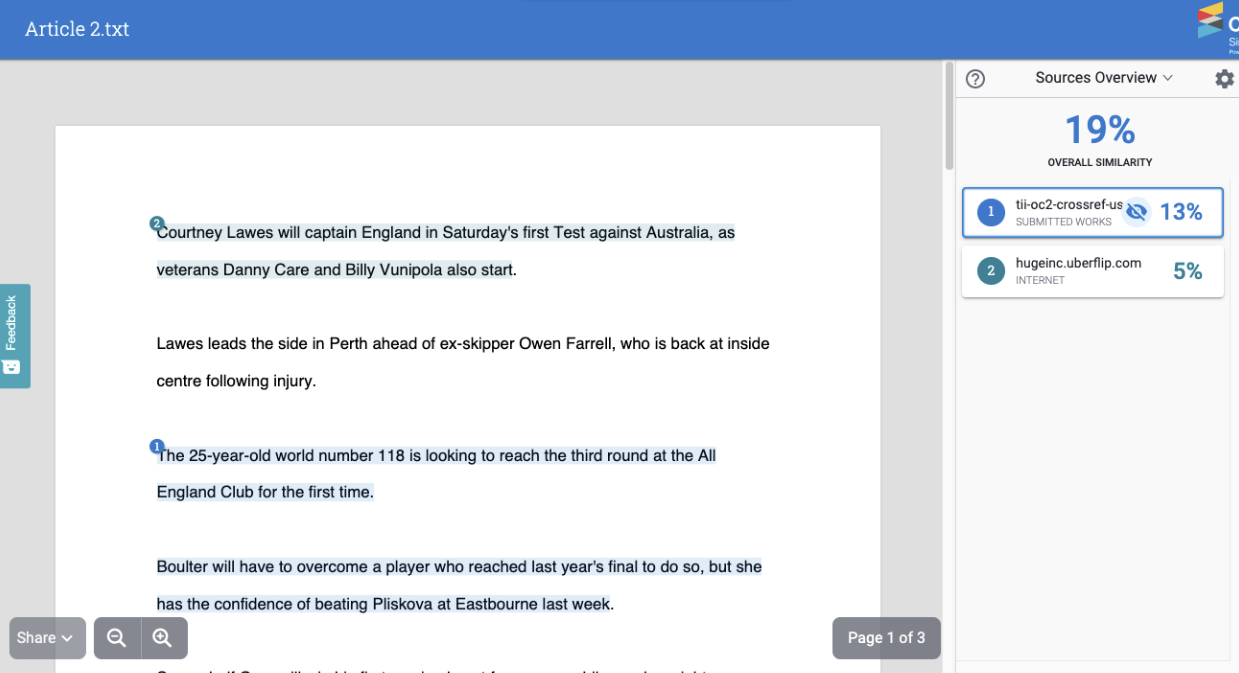
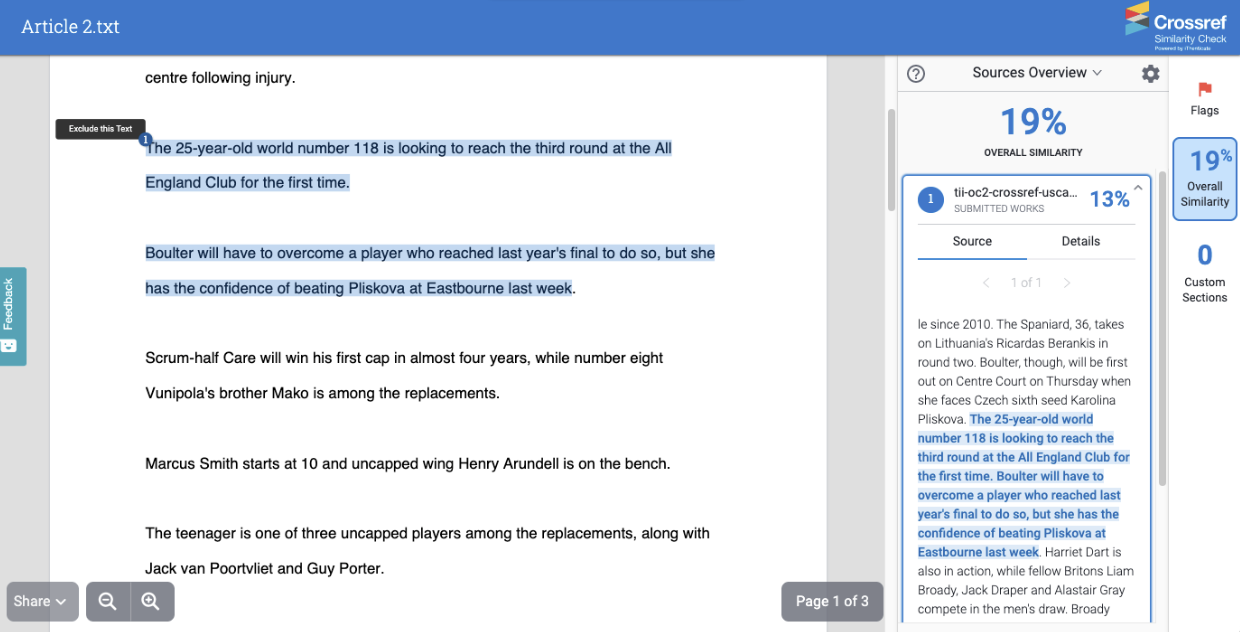
You have received a manuscript from Author 1 and have decided to index this manuscript into your Submitted Works repository. At some point later you receive a new manuscript from Author 2. When generating your Similarity Report, you have decided to check against your Submitted Works repository. There is a paragraph in the manuscript from Author 2 which matches a paragraph in the manuscript from Author 1. This would be highlighted within your Similarity Report as a match against your Submitted Works repository.
By clicking on this match you can see the full text of the submission you’ve matched against:
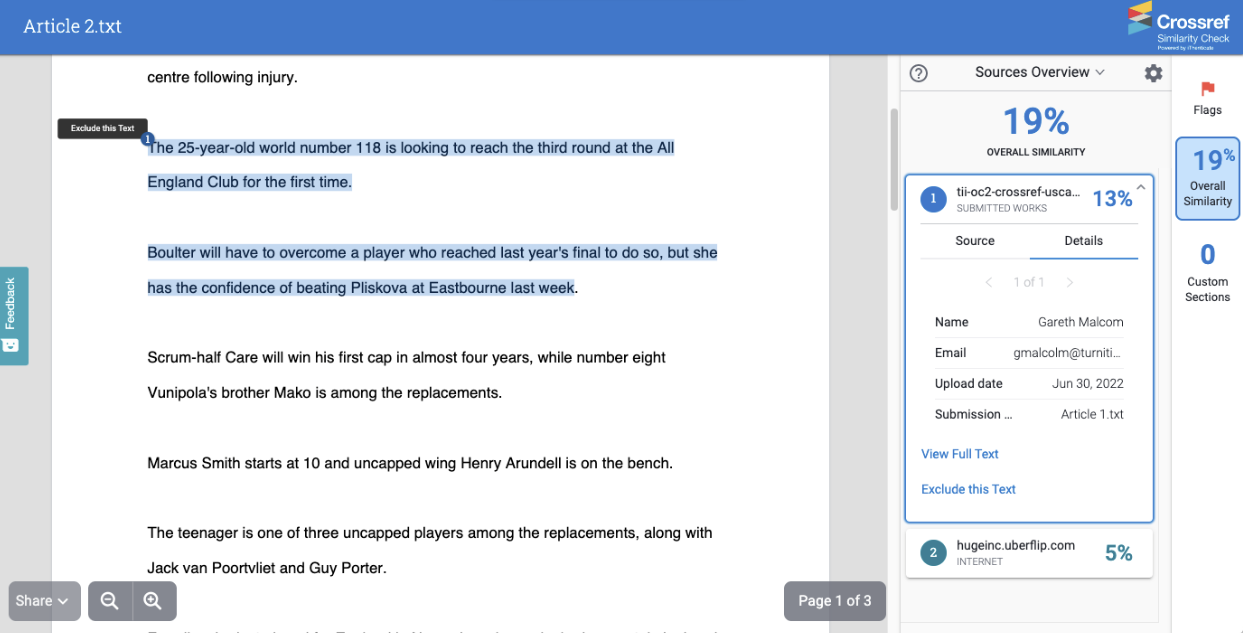
And details about the submission, such as the name and email address of the user who submitted it, the date it was submitted and the title of the submission:
The ability to see the full source text and the details can both be switched off individually.
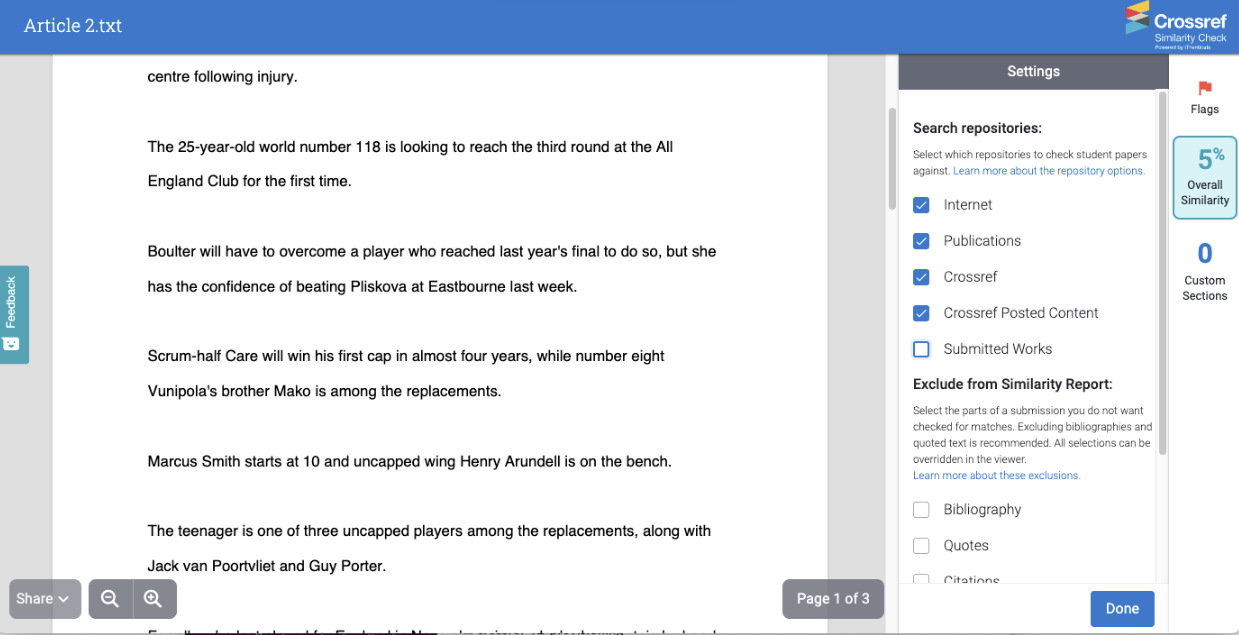
As with all matches, they can be excluded from the Sources Overview panel or you can turn off matches against all Submitted Works from the settings: