7 minute read.Some things are big because they are small – the new fee tier for Crossref members takes effect
Haz clic aquí para ver la versión en español
In January 2026, our new annual membership fee tier takes effect. The new tier is US$200 for member organisations that operate on publishing revenue or expenses (whichever is higher) of up to US$1,000 annually. We announced the Board’s decision, making it possible in July, and––as you can infer from Amanda’s latest blog––this is the first such change to the annual membership fee tiers in close to 20 years!
The new fee tier resulted from the consultation process and fees review undertaken as part of the Resourcing Crossref for Future Sustainability program, carried out with the help of our Membership and Fees Committee (made up of representatives from member organisations and community partners). The program is ongoing, and the new fee tier, intended to make Crossref membership more accessible, is one of the first changes it helped us determine.
When our membership renewal invoices are sent out in January 2026, the new fee tier will apply to 3,194 of our existing members, who will receive annual membership invoices 27% lower than previously. Surveys preceding the introduction of the new fee tier have shown that it might be applicable to between 30-60% of the organisations in what used to be our lowest fee tier (US$275 fee for organisations with publishing revenue or expenses of up to US$1 million).
We received positive feedback from members affected by the change.
We are very grateful for the new lowest membership fee tier. The Crossref fee is indeed a significant expense for our organisation, but we accept it given its importance. This new fee structure will make it easier for us to cover the cost.” – said Marina Pérez, Análisis Filosófico.
This initiative by Crossref to reduce membership fees is a welcome step toward achieving a truly global and connected research ecosystem. This will undoubtedly help our journal’s mission in fostering inclusive, open, and accessible publishing.” – said Dev Roychowdhury, Journal of Psychological Experience.
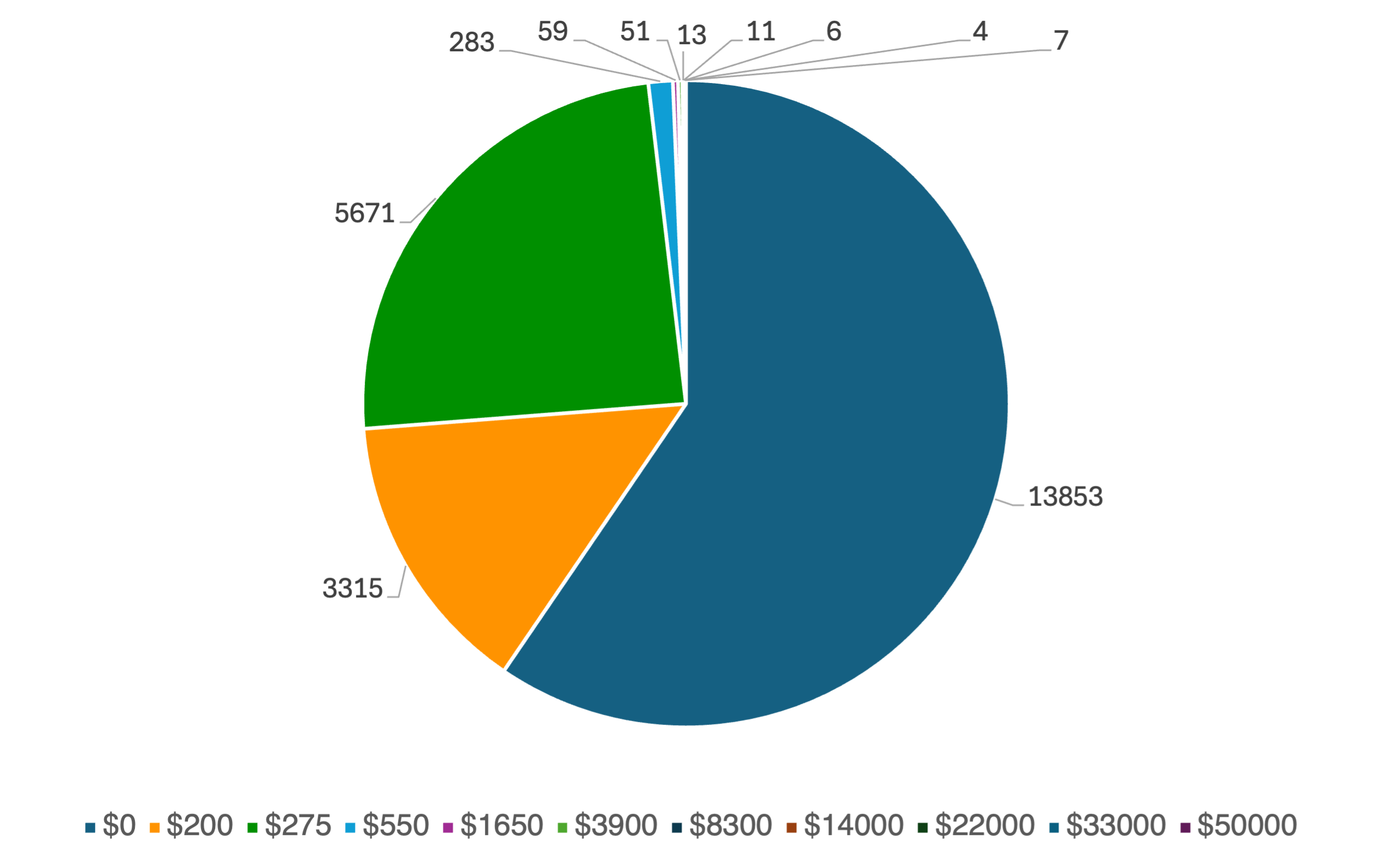
Following the feedback provided in the consultations and a number of prompts over the months after the original announcement, our Membership Team gathered information necessary to transition 3,194 members into the new fee tier. That’s 14.5% of all Crossref members (please note that in the graph below the number of members in $200 tier is higher due to recent influx of new members who didn’t need to transition, further – “$0” denotes all our sponsored members, who don’t pay membership fees to us, and those included in the GEM program).
Any members out there who think their organisation should be moved to the new lowest membership fee tier and haven’t already informed us – please contact us as soon as possible, before the end of the year, so we can make the change before invoices are raised in January.
We know – from speaking with our community (and thank you SO MUCH, for everyone’s feedback in surveys and discussions!) that this change makes participation in Crossref more accessible to smaller organisations communicating research. This will result in a continued flow of new records and associated metadata into the research nexus, helping us to make it easier to find and assess research, achieve greater transparency in the scientific process, and continue building trust in its outputs.
We’re not done reviewing our fees, and we don’t think the new fee tier addresses all the needs of the growing and evolving scholarly community. We continue working with Sponsors and Ambassadors, and we have upcoming changes to the Global Equitable Membership program to facilitate participation by all types and sizes of organisations sharing research.
Version in Español
Algunas cosas son grandes porque son pequeñas: la nueva tarifa para los miembros de Crossref entra en vigencia
En enero de 2026 entrará en vigencia nuestra nueva tarifa anual. Será de 200 dólares americanos (US$) para las organizaciones miembro que operen con ingresos o gastos editoriales de hasta 1000 US$ al año. Tras anunciar esta decisión de la Junta Directiva, se hizo realidad en julio y, como se puede inferir del último blog de Amanda, este es el primer cambio en las tarifas anuales de membresía en casi 20 años.
Esta nueva tarifa fue resultado de consultas y revisiones de tarifas que hicimos y que hacen parte del programa de financiación para la sostenibilidad a futuro de Crossref y que fue elaborada con la ayuda del comité de membresía y tarifas (compuesto por miembros representantes y aliados de la comunidad). El programa sigue en curso y la nueva tarifa, pensada para hacer más accesible la membresía de Crossref, es uno de los primeros cambios que nos ayudó a definir.
Cuando se envíen las facturas de renovación de membresía en enero de 2026, la nueva tarifa se aplicará a 3.194 de nuestros miembros actuales, quienes notarán que esta será un 27 % más económica que en otros años. Por otro lado, queremos que tengan en cuenta que las encuestas realizadas antes de la introducción de la nueva tarifa demostraron que esta podría ser aplicable a entre el 30 y el 60 % de las organizaciones que anteriormente se encontraban en nuestro nivel de tarifa más bajo (275 US$ para organizaciones con ingresos o gastos de publicación de hasta 1 millón de US$).
Ya hemos recibido retroalimentación positiva de miembros que han sido beneficiados con el cambio:
Estamos agradecidos por la nueva tarifa más baja. El costo de Crossref es, sin duda, un gasto significativo para nuestra organización, pero lo aceptamos dada su importancia. Esta nueva estructura de tarifa hará que cubrir el costo sea más fácil.”, dijo Mariana Pérez, de Análisis Filosófico.
La iniciativa de Crossref de reducir las tarifas de membresía es la bienvenida a lograr un verdadero ecosistema de investigación global y conectado. Sin duda, esto va a ayudar en la misión de nuestra revista de fomentar una publicación inclusiva, abierta y accesible.”, dijo Dev Roychowdhury, del Journal of Psychological Experience.
Siguiendo los comentarios proporcionados en las consultas y una serie de indicaciones a lo largo de los meses posteriores al anuncio original, nuestro equipo de membresías recopiló la información necesaria para trasladar a 3.194 miembros al nuevo nivel de tarifas, lo que representa el 14,5 % de todos los miembros de Crossref (el gráfico a continuación muestra que el número de miembros en el nivel de $200 es mayor debido a la reciente afluencia de nuevos miembros que no necesitaron hacer la transición; además, “$0” denota a todos nuestros miembros patrocinados, que no pagan cuotas de membresía, y a aquellos incluidos en el programa Global Equitable Membership (GEM)).
Nota: los miembros que consideren que su organización debería pasar a esta nueva tarifa de cuota de membresía y que aún no nos lo hayan comunicado, por favor, contáctenos antes de que termine el año para que podamos hacer el cambio antes de que se emitan las facturas en enero.
Dicho lo anterior, por medio de las conversaciones que tenemos con nuestra comunidad (y GRACIAS por todos sus comentarios en encuestas y debates), sabemos que este cambio hace que la participación en Crossref sea más accesible para organizaciones pequeñas que comunican investigación. Estamos seguros de que esto promoverá un flujo continuo de nuevos registros y metadatos asociados que sumarán al nexo de la investigación, lo que nos ayudará a facilitar la búsqueda y evaluación de la investigación, lograr una mayor transparencia en el proceso científico y seguir construyendo confianza en sus resultados.
Aún no terminamos de revisar nuestras tarifas y no creemos que este nuevo nivel de tarifas considere todas las necesidades de la comunidad académica, que está en crecimiento y evolución. Seguimos trabajando con nuestros patrocinadores y embajadores y tenemos próximos cambios en el programa GEM para facilitar la participación de organizaciones, de todo tipo y tamaño, que comparten investigación.
Traducido por: Nicolás Mejía Torres