Crossref members register around 37,000 records daily. All this metadata is openly shared with the global scholarly community through our free APIs. We receive over two billion calls to our API each month, signalling its use by hundreds of tools and services worldwide, supporting the discovery and assessment of scholarly metadata. As part of a new series in our blog, we will spotlight the diversity of tools and integrations that rely on Crossref metadata to serve the scholarly community. In this initial post, we chat to Luca Foppiano, the developer and maintainer of Grobid1, to learn about how Grobid uses Crossref metadata to improve the extraction and enrichment of bibliographic information from scholarly PDFs.
On behalf of the Nominating Committee, I’m pleased to share the slate of candidates for the 2026 board election. Every active member organisation is invited to submit a ballot to elect the incoming board class.
We’re providing a summary of the board’s July 2026 meeting. The July board meeting is our only in-person meeting. The board gathers for two days of strategic thinking and long-range planning, as well as conducting annual board business. This year, we focused on allocating surplus funds we have on hand to invest in a three-year project to redesign the content system. In a related discussion, we decided to lower content registration fees starting in 2027 because we’ve had a demonstrated history of generating surpluses, exceeding what we need to run Crossref. We also discussed the board structure, as part of our regular review of stakeholder governance. And we conducted annual board business, such as approving the audited financial statements and reviewed our risk register and mitigation plans.
The resolutions are available on the dedicated section of our website, which also lists the members of the Board and offers further information about our governance.
We also managed to squeeze in watching a World Cup game over dinner.
Starting today, funder names deposited in Crossref metadata without an identifier will be matched to ROR IDs, to support an open and connected Research Nexus. Funding information is an increasingly important part of the scholarly record. The improved matching strategy supports researchers, funders, institutions, and meta-researchers, who rely on that information to understand how research is supported and what outcomes that support produces.
Last week a bunch of Crossref’s staff traveled to the 2016 Society for Scholarly Publishing Annual Meeting in Vancouver, BC. After we returned en masse, all nine of us put our heads together to share some of our personal memories of the event.
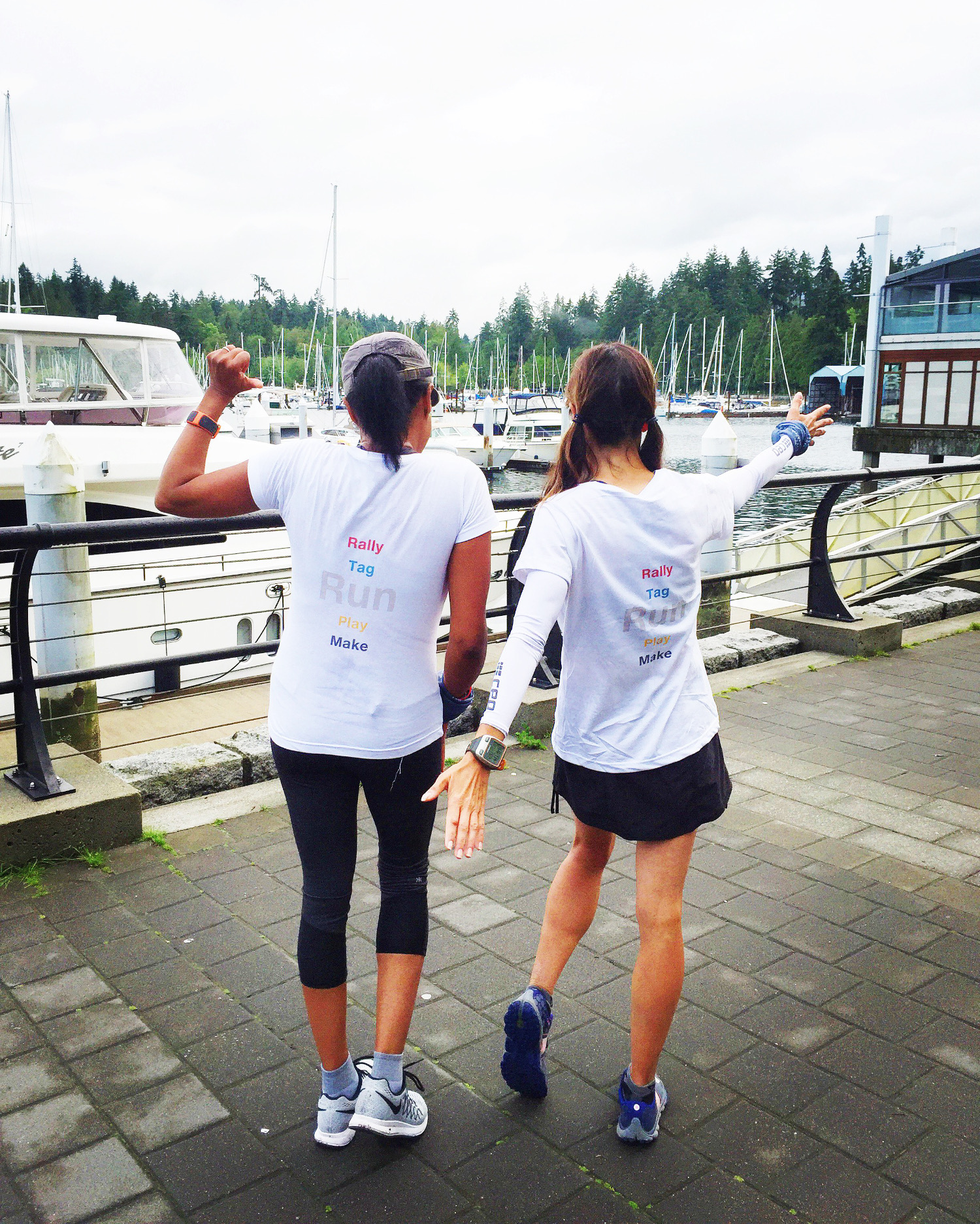
Crossref’s Rosa and Susan at the Fun Walk/Run sponsored by High Wire. 5K before breakfast!
On Cybersecurity and the Scholarly World —“The session described the many and complicated security threats that IT systems face and how threat detection and defense is a constantly ongoing activity. Certainly system administrators are challenged with the technology issues that build firewalls, block intrusions and divert disruptive activity. But perhaps even more important are the social issues that must be managed to develop an informed user community that is immune to the less technical but probably more effective hacks like phishing for user passwords.”
On Persistent Identifiers in Scholarly Communications: What, Why, How, Where, and Who? “Everyone from Crossref loved this panel, which should come as no surprise (wink). Persistent identifiers such as DOIs and ORCID iDs enable machine and human readers to discover, cite, link, and correctly attribute works across different platforms. David Crotty of the Oxford University Press said it best with ‘If you’re not actively building these persistent identifiers into your systems, get busy!’ Alice Meadows of ORCID represented the scholarly communications infrastructure with an image of shiny copper plumbing - don’t tell me we don’t have glamorous jobs! Laura Rueda of DataCite had particularly helpful diagrams to explain how persistent identifiers ease and speed the workflow of a research object as it travels from researcher to publisher to the greater community.”
OnCrossing Boundaries: Encouraging Diversity in Scientific Communication with Dr. Margaret-Ann Armour — “I decided to attend this keynote when I saw that men as well as women were in the audience. Dr. Armour had great anecdotes that supported formal data on women’s roles in STEM. It made me reflect on how the path to a career in scholarly publishing is often not direct, and relies on personal networking. She was very witty and deserved her standing ovation.”
On Standards and Recommended Practices to Support Adoption of Altmetrics — “Todd Carpenter summed up the intent behind many altmetrics initiatives when he said that understanding how many people are using and reading scholarly content is important because ‘we all want to know how we’re doing’ but ‘this project should never become the number’ because the intent is about ‘trying to add flavor and nuance to the conversation in a meaningful way’. Stuart Maxwell of Scholarly IQ also made a really astute observation that “all assessment is in some way subjective - impact is relative to how you compare yourself to other researchers in your field.” What especially appealed to me about this session was learning that NISO extends its remit to include the data quality performance of altmetrics aggregators themselves. Asking each aggregator to self-report a publicly available, annual accounting of how they comply with the Altmetrics Data Quality Code of Conduct will likely increase consistency, transparency and trust.”
SSP receptions & evening events, where mashed potato sundaes were a thing
Yes, the sessions are great, but some of the really interesting sights, sounds and discussions occur at the evening events. It’s impossible for one person to cover all of them (or is it?), but our idea of a few memorable highlights from this year’s SSP are, in no particular order:
“Tuesday’s reception—bar conveniently located just steps from the Crossref booth meant lots of good traffic! The convivial atmosphere made it easy to ignore that we were all tantalizingly close to the glorious view just outside the hotel doors. Wednesday’s reception was a chance to meet all the folks who didn’t make it in Tuesday. Though it seems most of us were delayed arriving in Vancouver, it was well worth the trip and arriving to find a few hundred colleagues all enjoying happy hour is a fine way to start a meeting.”
“HighWire’s reception at the Vancouver Rowing Club provided a lovely walk on the way there, a great band at the party and a shrimp tower almost (but not quite) too good looking to eat. The pouring rain on the walk back made for a memorable bonding experience.”
“Wildebeest was the atmospheric site of the Silverchair reception and great chance to see a bit of downtown before enjoying some good cheese and fine company. At least two of us attending made plans to save the world through better metadata. Over sparkling rose wine no less.”
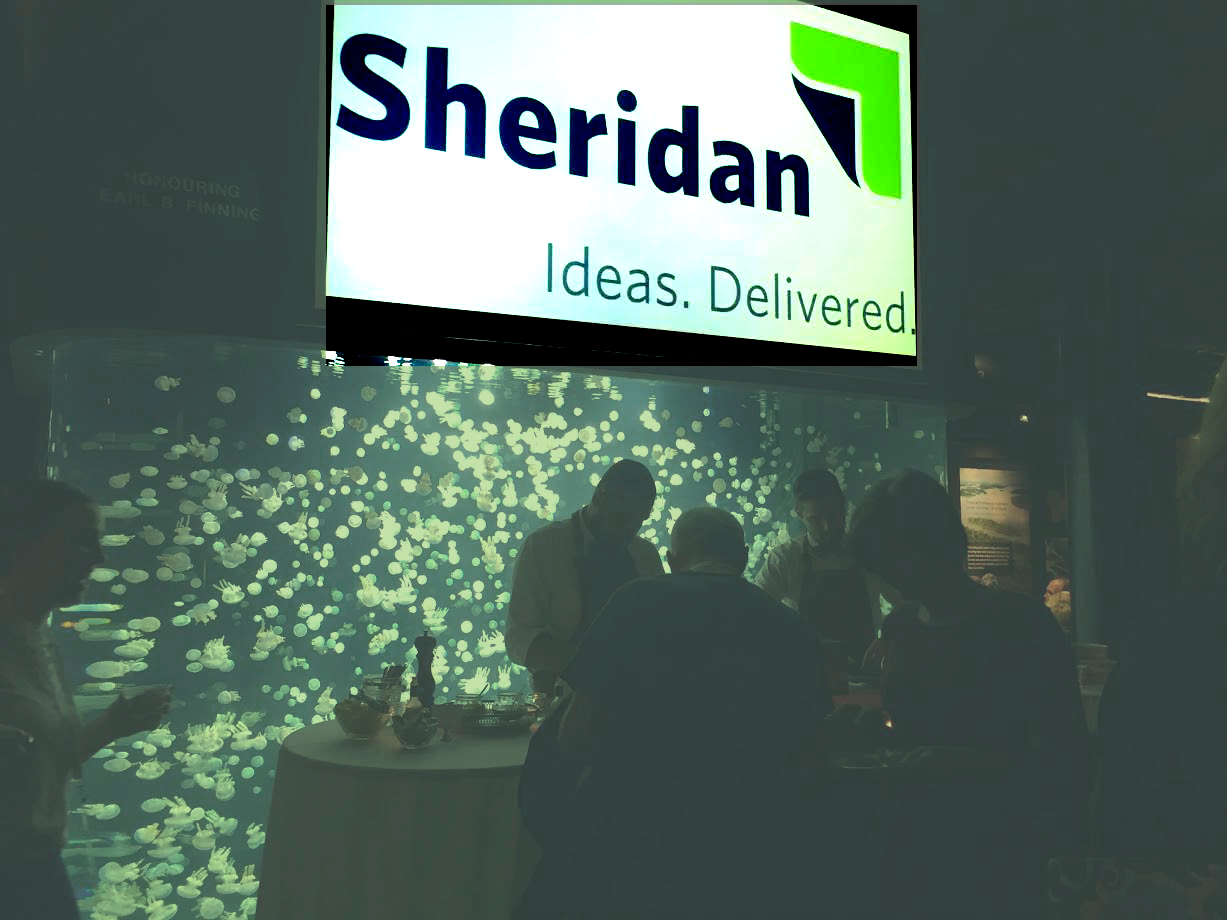
“Dolphins and sea otters made merry in a pool outside the Sheridan Group reception at the Vancouver Aquarium, while we noshed and drank with the fishes inside. But the food rivalled the undersea sights. A very nice gentleman with an ice cream scoop filled a parfait glass with a perfectly round dollop of mashed potatoes and told me to help myself to toppings. Shut the front door! I got the works. Delicious creamy mashed (whipped) potatoes of a perfect consistency, a ladle full of warm brown gravy topped with a generous sprinkle of finely sliced green onions (scallions), and a healthy spray of large, crispy bacon pieces!! It looked like a sundae … that you eat with a fork!!”
“The President’s reception was in the world’s largest hotel suite (approximately), with some very photogenic desserts and a lot of happy people who know that it’s well worth sacrificing some sleep for the event.”
Of course, the hotel bar in the evenings had some memorable discussions too but what happens in the bar stays in the bar, right? And we should probably all be grateful for the early last call …
’Til next year!
Related reading
Blog
Building, refining, and connecting: summary of our May 2026 community update